
• 1
  • 2
  • 3
  • 4
  • 5
  • 6
  • 7
  • 8
  • 9

ONLINE DATABASES


 logo ponda red

 The Ponda.org platform is an online tool for the scientific community and the wider public, focusing on artefacts from predynastic Egypt dating to the fourth millennium BC. Xavier Droux, external collaborator at the Laboratory of Africa and Anthropology (ARCAN), University of Geneva, initiated this large-scale project and is its current editor; he works in close collaboration with several researchers specialised in predynastic Egypt. The platform primarily aims to associate these objects with their origin, current location in museums and collections, and relevant literature.

The platform consists of interconnected databases for artifacts, individuals (archaeologists, collectors), archaeological sites, collections, and publications. It facilitates collaboration and understanding of ancient Egyptian artifacts, promoting cultural heritage exploration.

The development of this project is supported by the Thomas Heagy Foundation.

Ponda.org
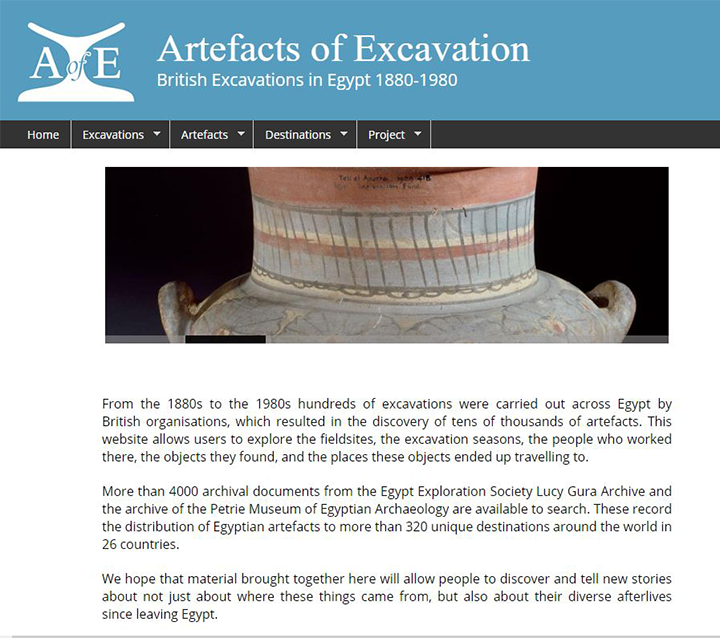
AoE.png

Artefacts of Excavation. British Excavations in Egypt 1880-1980
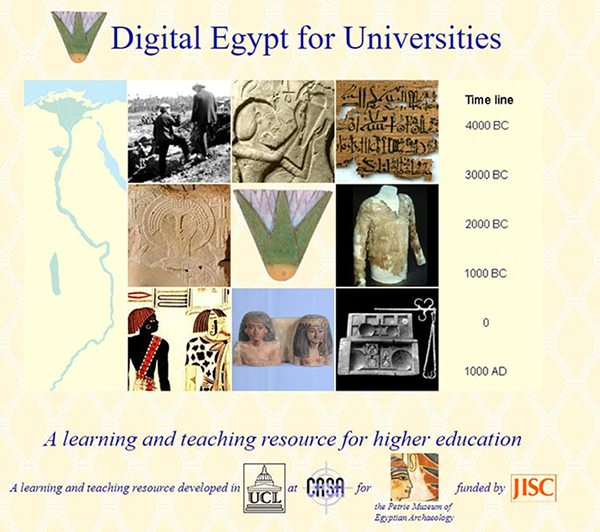
 

Digital Egypt web

Digital Egypt for Universities


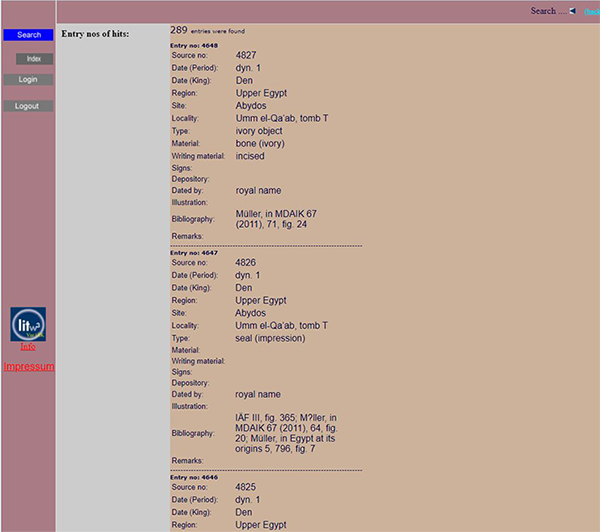
Inscriptions web

Early Dynastic inscriptions


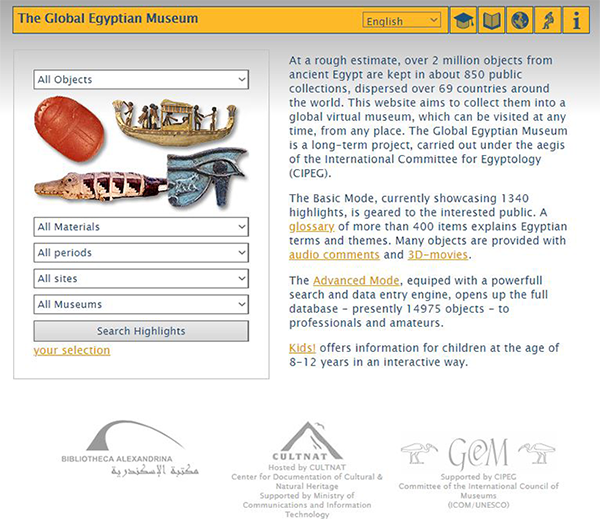
The Global Egyptian Museum web

Global Egyptian Museum project


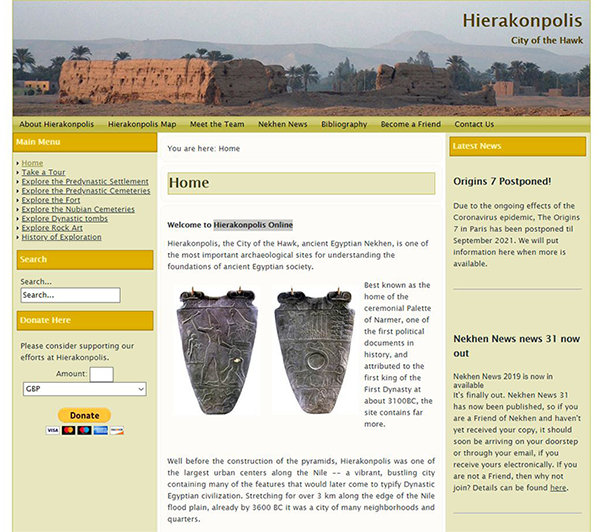
Hierakonpolis web

Hierakonpolis Online


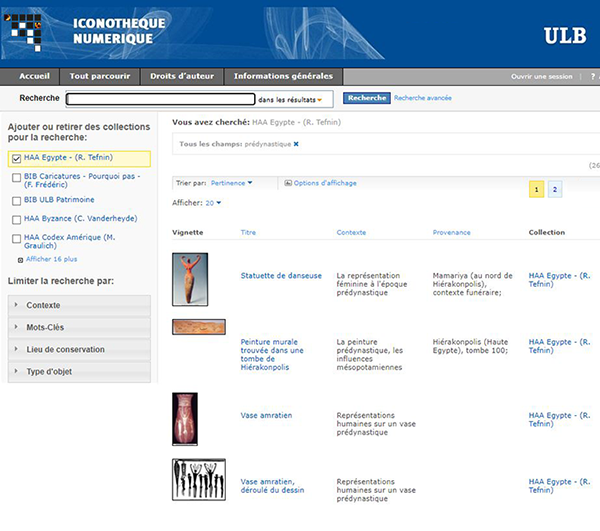
ULB web

Iconothèque numérique de l’Université Libre de Bruxelles
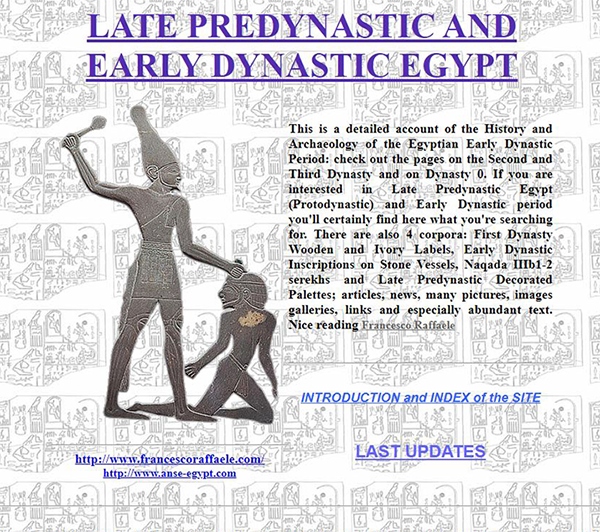
 

LPEDE web

Late Predynastic and Early Dynastic Egypt
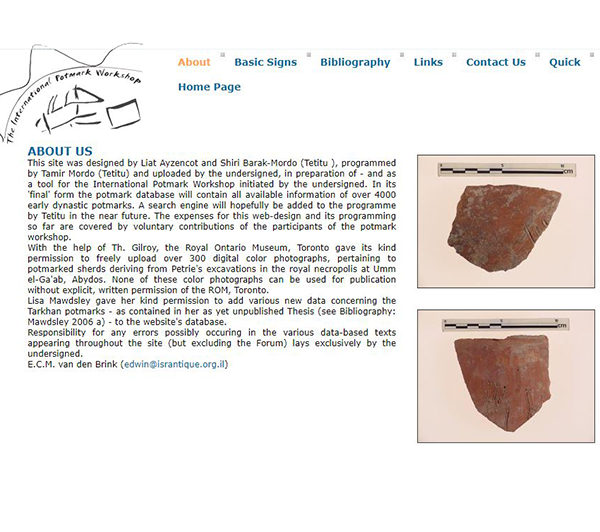
 

Potmark web

The International Potmark Workshop
 

News

AGM 2026

Our next Annual General Meeting will take place on Monday 22 January 2026 at 6:00 pm at the École du Louvre, Palais du Louvre, Place du Carroussel, Porte Jaujard, Paris 1er (métro Palais-Royal/Musée du Louvre, lines 1 and 7).

It will be followed by the lecture (in French) of Nathalie Buchez (INRAP Hauts-de-France, UMR 5608 TRACES) and Samuel Guérin (Inrap Hauts-de-France, UMR 8164 HALMA)


Tell el-Iswid et les sociétés prédynastiques deltaïques : de la culture de Basse-Égypte à l’unification politique

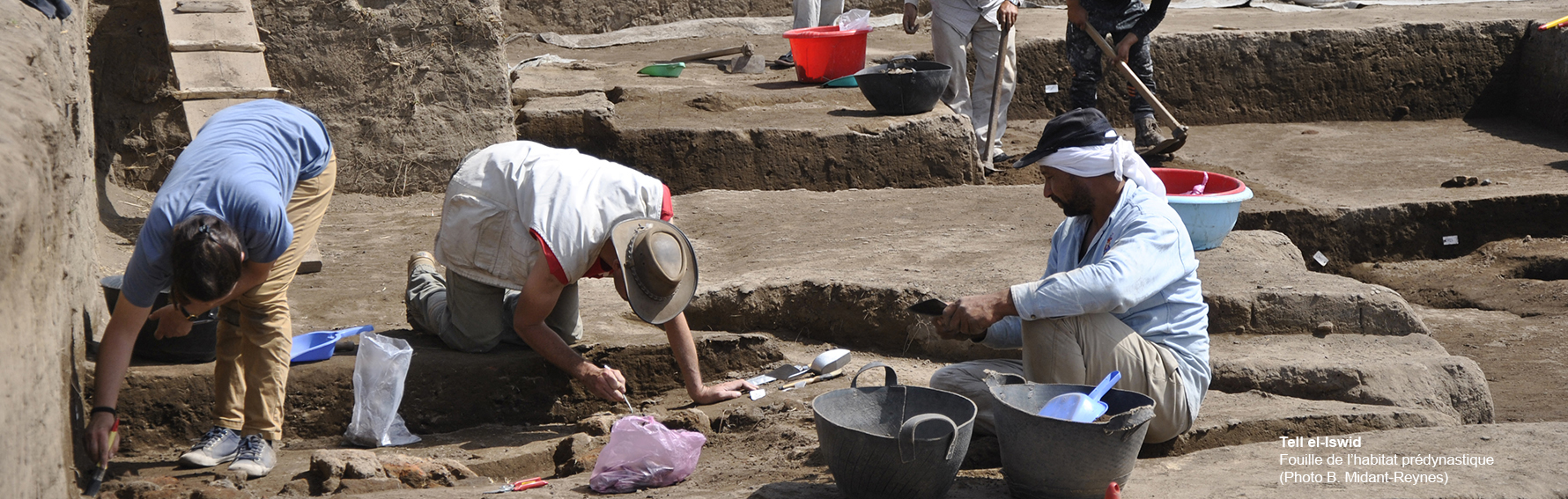
 Le Tell d’Iswid localisé dans le delta oriental est le fait d’une occupation continue entre 3800 BCE et 3100 BCE. Il offre l’opportunité d’étudier, du point de vue des communautés du nord, de Basse-Égypte, longtemps restées dans l’ombre par rapport à celles du sud, de Moyenne/Haute-Égypte, les évolutions majeures qui s’opèrent au cours au IVe millénaire pour déboucher en fin de millénaire sur une monarchie et une culture unifiée.

Le techno-complexe de Basse-Égypte (ou de culture Bouto) semble se démarquer du Néolithique local et suivre une trajectoire évolutive propre, marquée par une forme de spécialisation et par là même de complexification sociale, jusque 3400/3300 BC et les bouleversements qui découlent du développement des contacts avec la Moyenne/Haute-Égypte.

On aborde alors l’une des questions parmi les plus largement débattues et qui a trait aux processus de formation de l’Égypte pharaonique : l’homogénéisation culturelle de la fin du IVe millénaire qui d’après nos travaux serait directement liées à l’unification politique et aux changement drastiques du système de production qui l’accompagne.


Tell el-Iswid and the Predynastic Deltaic Societies: From Lower Egyptian Culture to Political Unification

 The site of Tell el-Iswid, located in the eastern Nile Delta, exhibits continuous occupation from 3800 to 3100 BCE. It provides a unique opportunity to study—from the perspective of the northern communities of Lower Egypt, long overshadowed by those of the south (Middle/Upper Egypt)—the major transformations that took place during the 4th millennium BCE, culminating at the end of the millennium in a unified monarchy and culture.

The Lower Egyptian techno-complex (or Buto culture) appears to diverge from the local Neolithic and follow its own evolutionary trajectory, characterized by increasing specialization and, consequently, social complexity, up to 3400/3300 BCE. This period marks a turning point, as profound changes arose from the intensification of contacts with Middle/Upper Egypt.

This leads to one of the most hotly debated questions concerning the formation of pharaonic Egypt: the cultural homogenization of the late 4th millennium BCE, which, according to recent research, is directly linked to political unification and the drastic changes in production systems that accompanied it.


News


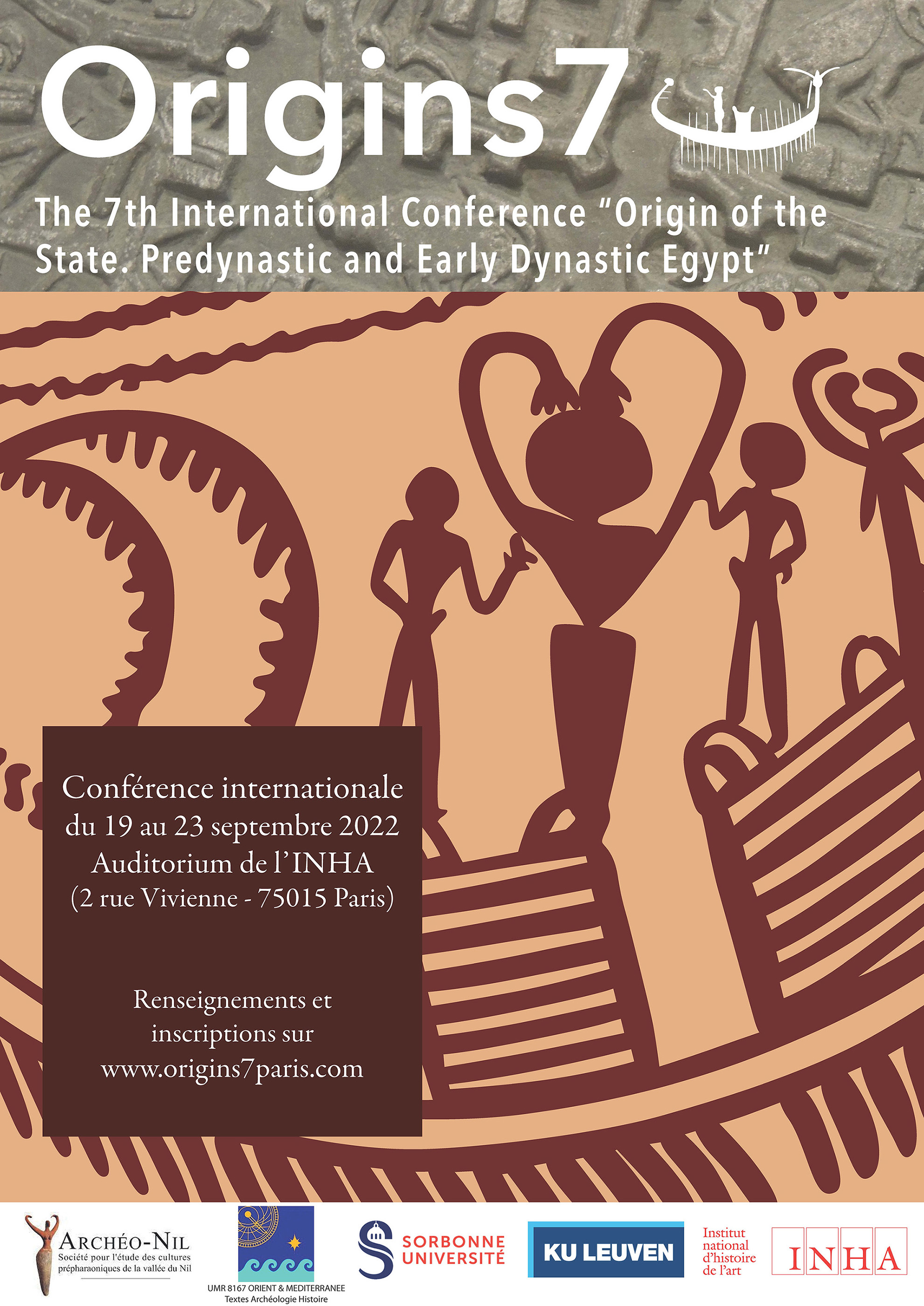
Affiche Origins7

Origins7 Conference in Paris!

19-23 September 2022

Paris hosted the 7th edition of the Origins international conference dedicated to the study of Predynastic and Early Dynastic cultures of the Nile Valley. For five days, specialists in the field will present their work and discuss the most recent results. Archéo-Nil is a partner of the event.

For more information: www.origins7paris.com


News

 25/06/2021

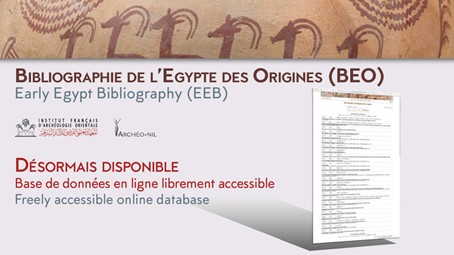
Early Egypt Bibliography (EEB)

BEO


For over 25 years, the “Bibliography of the Prehistory and the Early Dynastic period of Egypt and northern Sudan” has been the essential bibliographical research tool regarding the Prehistoric, Predynastic and Early Dynastic periods in Egypt and northern Sudan (up to the latitude of Khartoum). The original bibliography was published in 1995 by Stan Hendrickx, with yearly updates in the journal Archéo-Nil, from 2010 onwards in collaboration with Wouter Claes. With the generous aid and collaboration of the IFAO (Christian Gaubert) and Archéo-Nil (Yann Tristant), the EEB is now available as a freely accessible and online database at

https://www.ifao.egnet.net/bases/beo/

News

05/05/2022

persee.fr

Archéo-Nil is now available open access on Persée!

Our journal is now available open access on the website Persée nd includes the volumes from 1990 until 2021. Each article has a doi and keyword search is now possible. You can find them from the Journal tab or directlty on Persée website.

More articles will be available soon. Happy reading!


More


Contact

Archéo-Nil

Archéo-Nil

Archéo-Nil is a non-profit society created in 1990 to promote the study of the pre-pharaonic cultures of the Nile valley (newsletters, conferences, exhibitions, conferences, etc.) and to assist associated research and archaeological expeditions.”Archéo-Nil is a non-profit society created in 1990 to promote the study of the pre-pharaonic cultures of the Nile valley (newsletters, conferences, exhibitions, conferences, etc.) and to assist associated research and archaeological expeditions.


Archéo-Nil

Collège de France

11 Place Marcelin Berthelot

75231 Paris

France

secretariat@archeonil.fr

  Facebook   Twitter